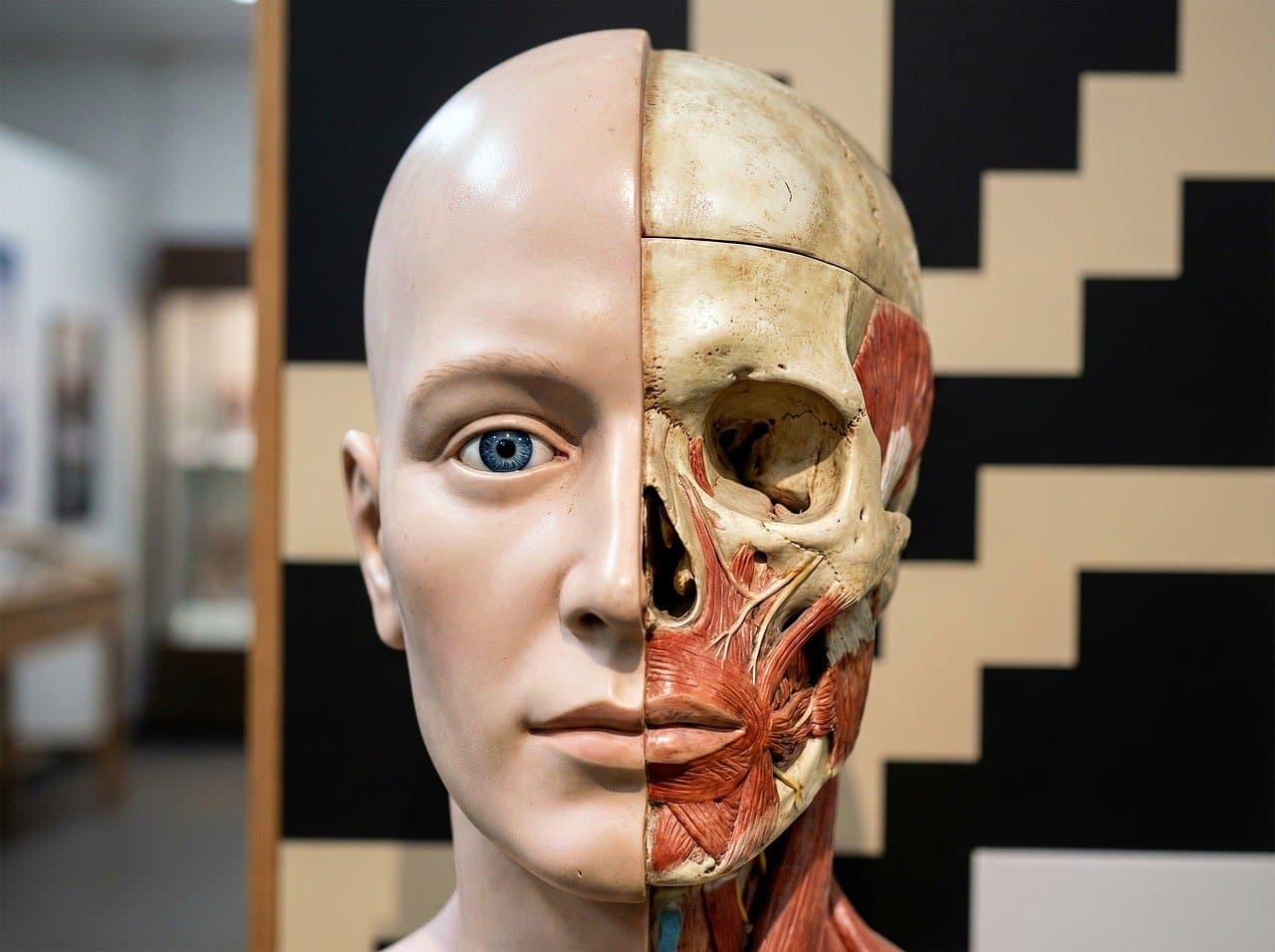
In 2023, the University of Sheffield announced it would permanently discontinue cadaveric dissection in its undergraduate medical programme, citing unresolved ventilation problems and the costs of maintaining a donor facility. Oxford had already abandoned it. Exeter and Plymouth never adopted it. What was once described as the foundational rite of passage of medical training - the encounter with a human body that generations of physicians identified as the moment their professional identity began to form - is quietly disappearing from an increasing number of UK medical schools. The question of whether this matters is not settled. It is, in fact, one of the most substantive unresolved debates in contemporary medical education, with direct implications for patient safety, professional formation, and the anatomical competence of the doctors the MLA is designed to assess.
The Scale of the Retreat
The current state of anatomy teaching in the UK is the product of a slow contraction that began with the GMC's landmark 1993 report, Tomorrow's Doctors, which called for a reduction in factual overload and greater integration across disciplines. The pedagogical logic was defensible - the traditional anatomy syllabus was vast, frontloaded, and poorly connected to clinical reasoning. However, the unintended consequence was a progressive reduction in the time, staffing, and institutional investment devoted to anatomy as a discipline. A 2022 study by Smith and colleagues published in Anatomical Sciences Education, representing a 20-year follow-up of a landmark 1999 survey, found that across five years of study, medical students in the UK were allocated on average 85 hours of gross anatomy teaching - a loss of 39 hours compared to the previous survey period - with reductions across every anatomy subdiscipline. Those 85 hours represent the total taught time for gross anatomy across an entire undergraduate degree. For context, that is approximately two working weeks.
By 2019, 34 of 39 UK medical schools were still using cadavers in some capacity, but the picture was already highly heterogeneous. Only a subset offered active full-body dissection; others used prosected specimens prepared in advance by technicians or anatomists; still others had moved to technology-enhanced learning as their primary practical modality. The COVID-19 pandemic then served as an accelerant. Where dissection rooms were closed by public health requirements, many institutions discovered they could deliver anatomy teaching without them - at least in the short term - and some have not returned. The infrastructure required to maintain a body donation programme, manage a dissection facility under current health and safety and Human Tissue Authority regulations, and staff it with appropriately trained educators is substantial, and in an era of constrained university finances, the cost-benefit analysis is increasingly being made against the cadaver.
The Case Against Dissection
The sceptical position is not without intellectual substance. Proponents of curriculum reform argue that what students need is not encyclopaedic anatomical knowledge acquired by personally removing structures from a cadaver, but a clinically applicable understanding of anatomy that supports diagnosis, procedural safety, and communication with patients. On this view, the question is not whether students learn from cadavers but whether they learn more - and more usefully - from cadavers than from prosected specimens, high-quality imaging, three-dimensional digital models, or simulation platforms. The evidence base on this point is genuinely contested.
A BMJ debate published in April 2025 (Shastri, Wiles, and colleagues) presented the case against mandatory dissection from multiple perspectives, including a 2024 medical graduate who argued that the pedagogical payoff of dissection depends heavily on timing and prior knowledge — that students encountering a cadaver in their first year, before they have a conceptual framework for anatomy, derive limited benefit compared to those encountering cadaveric material once they can contextualise what they are seeing. A meta-analysis on virtual reality and augmented reality published in Anatomical Sciences Education in 2024 found that immersive digital platforms could match prosection-based learning on certain knowledge outcome measures, and were associated with higher student engagement and lower anxiety. The digital anatomy market has expanded rapidly, and tools such as the Anatomage table have been adopted by numerous UK institutions as primary practical resources. Proponents argue that these platforms can provide standardised, repeatable, and in some respects richer anatomical experiences - cross-sectional anatomy integrated with imaging, for instance - that cadavers cannot.
Frank Smith, Professor of Vascular Surgery and Surgical Education at the University of Bristol and a council member of the Royal College of Surgeons of England, has argued that physical simulations and digital platforms are now very effective and improving rapidly, that they can provide more targeted teaching than cadavers for many students, and that equity of access requires acknowledging the range of methods that can deliver successful anatomy education.
The Case For Dissection
The counterargument is that the retreat from cadaveric dissection is not being driven by educational evidence but by financial expediency, institutional inertia, and the convenient availability of technological substitutes whose long-term outcomes have not yet been rigorously demonstrated. Writing in the Bulletin of the Royal College of Surgeons of England in 2024, Professor Claire Smith of Brighton and Sussex Medical School offered a robust defence of cadaveric teaching that ranged well beyond knowledge acquisition. She argued that cadaveric dissection develops manual dexterity, teamwork, the ability to allocate tasks within groups, and - critically - an orientation towards physical examination and the acceptance of hands-on engagement with the human body that is increasingly lost as medical practice becomes more technologically mediated. On this account, the dissection room is not merely an anatomy classroom. It is a site of professional identity formation, ethical reflection, and the cultivation of the practitioner's relationship with the embodied reality of illness and death.
There is also a patient safety argument that deserves serious engagement. Anatomical knowledge gaps in practising doctors have been documented in the surgical and procedural literature for decades. The question is whether such gaps are attributable to reduced dissection teaching specifically, or to broader erosion of anatomical curricula. A review published in PMC examining failures in undergraduate anatomy education concluded that reduced time allocation, changes in teaching methods, and the disruptions of COVID-19 had marginalised anatomy teaching in ways carrying implications for patient safety, litigation, student satisfaction, and surgical workforce planning. The surgical workforce concern is particularly acute: a junior doctor who has never personally dissected tissue, never manipulated instruments in an anatomical context, and whose spatial understanding of three-dimensional structure derives entirely from two-dimensional digital representations may face a steeper learning curve in procedural training than their predecessors.
The Equity Dimension
There is a dimension to this debate that rarely receives sufficient attention: the question of equity. Students at institutions that retain cadaveric dissection programmes are receiving a materially different anatomical education from those whose entire practical experience consists of prosected specimens or digital tools. Whether this difference is educationally significant remains contested, but the fact of the difference is not. The MLA content map does not specify cadaveric dissection as a required component, and there is no national minimum standard for anatomy teaching hours or modalities in UK medical education. This creates the possibility - arguably the reality - of significant variation in anatomical preparation between graduates of different schools, which sits uneasily alongside a licensing assessment predicated on common standards.
Smith and colleagues' 2022 Anatomical Sciences Education study made this point clearly: the data showed not only reduction over time but wide interinstitutional variation in contact hours, teaching approaches, and resources, with no national framework for alignment. Whether this variation produces differences in clinical performance is a question the field has not yet satisfactorily answered, in part because the methodological challenges of linking undergraduate anatomy teaching modality to downstream clinical outcomes are formidable.
Where Does This Leave the Curriculum?
The most intellectually honest position is that neither side in this debate has definitively demonstrated its case. The evidence for the superiority of cadaveric dissection over prosection or digital alternatives - in terms of knowledge acquisition at the undergraduate level - is weaker than its advocates sometimes acknowledge. The evidence that digital alternatives are fully equivalent - in terms of professional formation, spatial reasoning, and the development of a hands-on clinical orientation - is also weaker than their proponents suggest. What is not in dispute is that anatomy teaching hours have fallen substantially over twenty years, that the profession is more technically dependent than ever, and that graduates are being asked to perform with less foundational preparation than their predecessors at a time when clinical procedures are simultaneously more complex and more closely scrutinised.
The absence of a GMC requirement for cadaveric teaching reflects a principled agnosticism about modality. But it also allows institutions to make decisions that are driven by cost rather than pedagogy, with students bearing the consequences. The debate published in the BMJ in April 2025 - involving both students who valued dissection and a graduate who had managed without it - illustrated that student experience of this question is itself heterogeneous, and that it is shaped significantly by where and how anatomy is taught, not only by whether cadavers are involved.
Examination Relevance for AKT and MLA Candidates
Anatomy features throughout the MLA blueprint, particularly in clinical scenarios involving procedural reasoning, imaging interpretation, and the localisation of pathological findings. The MLA does not test rote anatomical recall in isolation - it is not a test of knowing that the brachioradialis is innervated by the radial nerve - but rather the application of anatomical knowledge to clinical decision-making. This means that students who have developed a robust three-dimensional spatial understanding of anatomy, by whatever teaching method, will be better placed than those with superficial or poorly integrated knowledge.
Candidates from institutions where dissection remains part of the curriculum may have developed certain spatial intuitions that require more deliberate consolidation through imaging and case-based work at schools using purely digital modalities. The practical implication for revision is that anatomical knowledge should always be anchored in clinical application: cross-sectional anatomy through CT and MRI, surface markings through procedural scenarios, and regional anatomy through case presentations. The debate about how anatomy is taught is, ultimately, a debate about what kind of doctors the UK needs - and that is a question the MLA itself is designed to help answer.